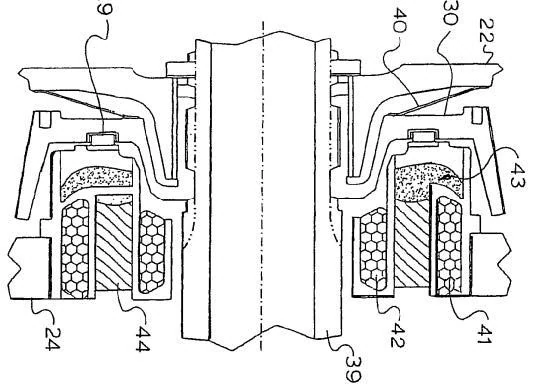
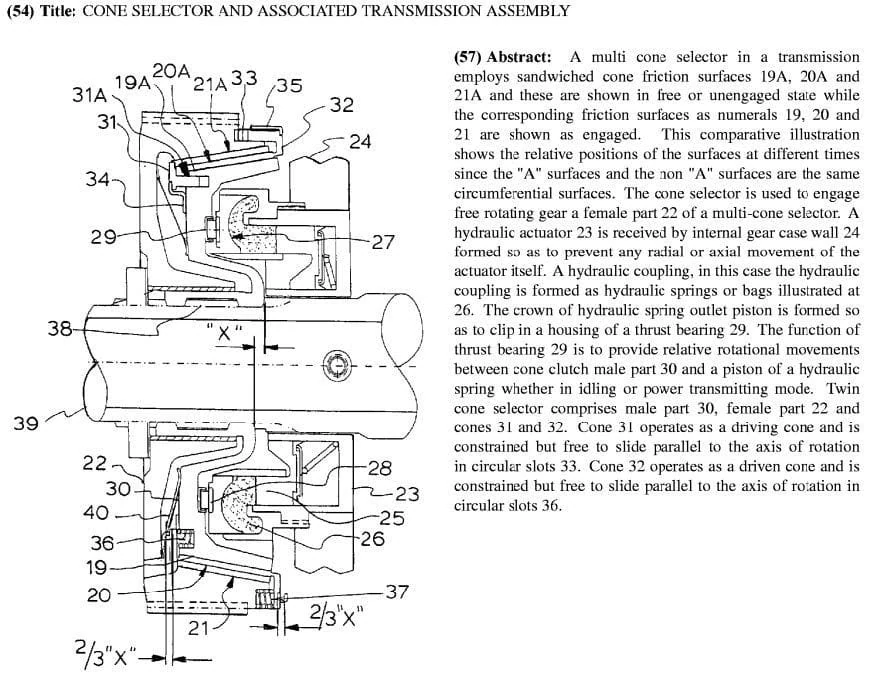
CONE CLUTCH SOLUTIONS DIFC Ltd (CCS) Up to 84% Gain / Lower Engagement Force for EVs & Industrial Drivetrains 👉 Patents past and pending Patent 2026901295: Electronically Actuated Multi-Cone Clutch Platform for Industrial, Marine, Aerospace, Robotics, Mining, Rail, and Renewable Energy Applications; and 👉 Patents past and pending Patent 2026901148: A motor-assisted constant-mesh multi-cone selector transmission system for electric vehicles
“A Global Platform Technology With a Billion‑Dollar Commercialisation Pathway.”
EV-native multi-cone clutches for AUTOMOTIVE, ROBOTICS & INDUSTRIAL applications
A world where torque transfer is smarter, cleaner, faster, and more efficient.Electrification is reshaping every sector — from automotive to aerospace, robotics to renewable energy. Yet torque transfer systems have barely evolved. We believe the future belongs to electronically controlled, up to 84% high‑efficiency, multi‑cone clutch systems that unlock new performance levels while reducing energy consumption and mechanical wear.
Tested over 17,000 harsh engagements at SwRI.org - up to 84% Gain / Less Axial Force vs Flat-Plate Clutches
CCS Core AdvantageCone Clutch Solutions uses the electric motor as a precision synchroniser, slowing seamlessly to match shaft speeds while the multi‑cone clutch engages with 84% less axial force than flat‑plate systems. This ultra‑low engagement load enables fast, accurate electric actuation, delivering controlled slip, smooth gear changes, minimal wear, and a fully software‑defined shift experience purpose‑built for EVs and high‑efficiency drivetrains.
Up to 84% Gain / Less Axial Force vs Flat-Plate Clutches
Protected by global patent filings.
Validated by independent testing 17,000 harsh engagements at SwRI.org results proven up to 84% gain (84% less axial engagement force) vs Flat-plate clutches.
Support for OEM integration.
I’m a paragraph. Drag me to add paragraph to your block, write your own text and edit me.
Electric Vehicles Robotics Industrial applications Multi-Cone-Clutches Multi-Speed Transmissions
A Strategic & Technical Snapshot
🧩 Why Cone Clutches Make Sense for EVsCone clutches solve the two big problems that make traditional dog‑clutch or synchro-based multi‑speed EV transmissions unattractive:
✅High torque at zero RPM EVs produce instant torque, which destroys dog clutches and makes synchronisation difficult. A cone clutch loves torque because the wedging action increases holding force.
✅Smooth, slip‑controlled engagement With motor‑assisted synchronisation, a cone clutch can engage seamlessly with minimal heat and wear.
✅Large torque capacity in a compact package A cone clutch’s surface area and wedging angle give it far higher torque density than flat clutch packs.
🧩 Why Cone Clutches Make Sense for EVsCone clutches solve the two big problems that make traditional dog‑clutch or synchro-based multi‑speed EV transmissions unattractive:
✅High torque at zero RPM EVs produce instant torque, which destroys dog clutches and makes synchronisation difficult. A cone clutch loves torque because the wedging action increases holding force.
✅Smooth, slip‑controlled engagement With motor‑assisted synchronisation, a cone clutch can engage seamlessly with minimal heat and wear.
✅Large torque capacity in a compact package A cone clutch’s surface area and wedging angle give it far higher torque density than flat clutch packs.
🔧 Architecture Advantages (EV‑Optimised)
- 1) Motor‑Assisted Synchronisation
- The EV motor itself becomes the synchroniser.
- This eliminates:
- synchro rings
- blocker mechanisms
- shift shock
- high wear
- 2) Stacked Cone Torque Multiplication
- Stacked cones multiply torque capacity without increasing diameter.
- This is the core of EVCC’s advantage:
- High torque, low axial force, compact packaging.
- 3) 2‑Speed or 3‑Speed Layouts
- 2‑speed: ideal for passenger EVs
- 3‑speed: ideal for performance, towing, commercial, or motorsport EVs
- 4) Low Heat, Low Losses
- Because the clutch only slips briefly during synchronisation, thermal load is tiny compared to wet clutch packs.
- 5) Competitor list:
- Legacy EV Transmission Approaches:
- 2-speed dog clutches Porsche Taycan)
- Wet multi-plate clutches (ZF, Magna)
- Planetary gearsets (Toyota, GM hybrids)
- 🚀 Commercial Advantages
- ✅Higher efficiency
- Improved low‑speed torque and high‑speed efficiency.
- ✅Smaller motor
- A multi‑speed EV can downsize the motor while maintaining performance.
- ✅Better towing, hill climbing, and sustained power
- A fixed‑ratio EV overheats under load; a multi‑speed EV doesn’t.
- ✅Patentable differentiation
- Cone‑clutch EV transmissions are not widely explored by OEMs, giving strong IP defensibility — especially with multi‑cone, EV‑native actuation.
- 🏁 Competitive Landscape
- Most competitors use:
- 2‑speed dog clutches (Porsche Taycan)
- Wet multi‑plate clutches (ZF, Magna)
- Planetary gearsets (Toyota, GM hybrids)
- None of these match the torque density, smoothness, or simplicity of a multi‑cone EV clutch.